Regenerative Bioproducts
Patients often ask whether regenerative support may be considered for joint, tendon, or ligament concerns. These options are discussed only after a personalized evaluation.
Simple education without hype
Clear, patient-friendly guidance to help you understand regenerative medicine, your evaluation process, and whether it may support your mobility and quality of life.
Ask questions first. No pressure. Personalized evaluation required.


Regenerative medicine focuses on supporting the body’s natural repair and recovery processes. It looks at the tissues involved, the cause of the problem, and the type of support your body may need to recover more comfortably when appropriate.
Before discussing options, Dr. Esparza reviews your health history, diagnostics, mobility goals, and lifestyle so you can understand what may be appropriate for your individual case.
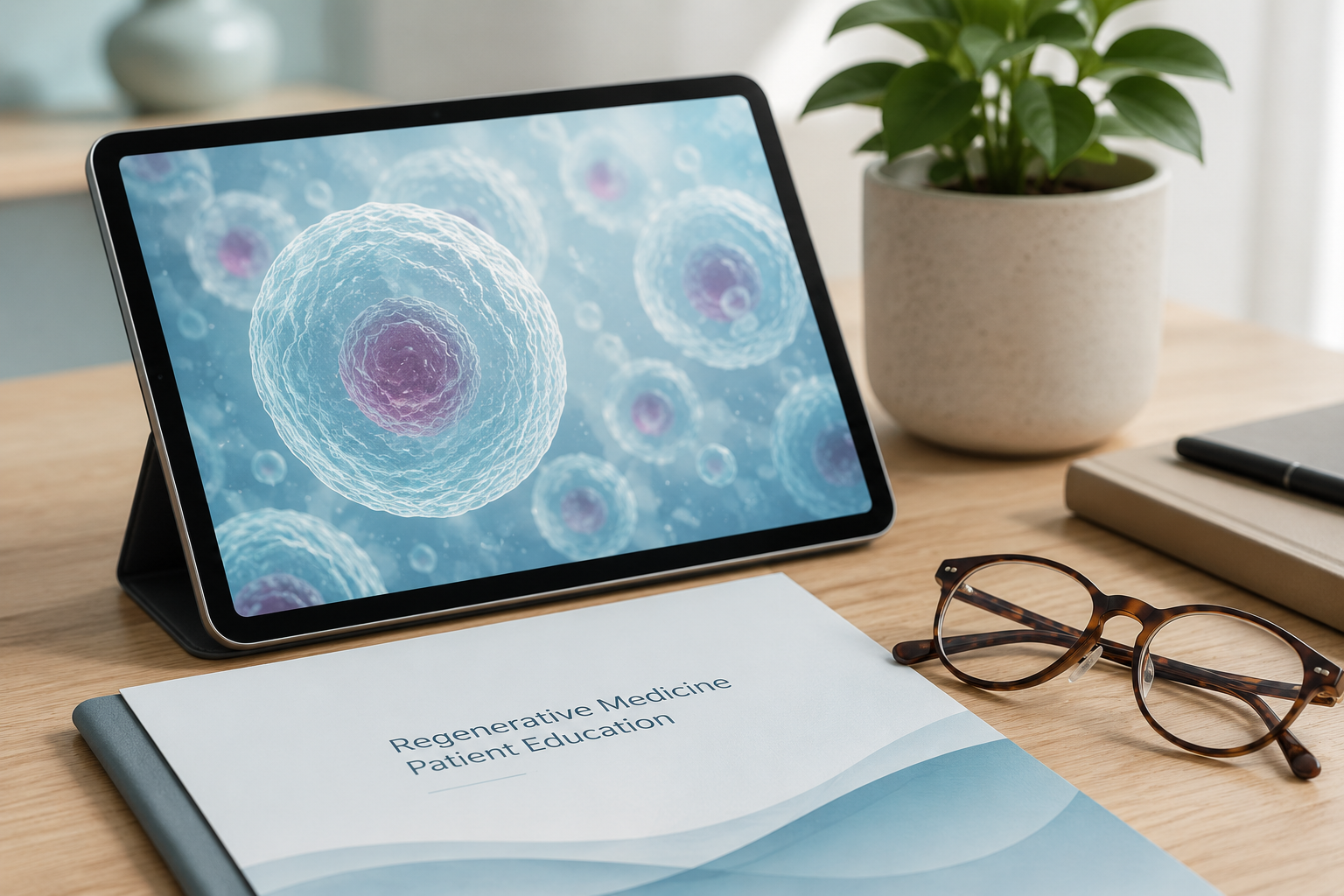
Mesenchymal stem cells, or MSCs, are cells studied for their role in repair signaling, tissue support, and communication within the body's recovery process.
They may be discussed as part of a personalized regenerative medicine plan, depending on your health history, diagnostics, and goals. Common sources in patient education include umbilical cord, placenta, and Wharton's jelly.
Patients often ask whether regenerative support may be considered for joint, tendon, or ligament concerns. These options are discussed only after a personalized evaluation.
MSCs and exosomes are often mentioned together, but they are not the same. MSCs are cells studied for repair signaling; exosomes are communication particles released by cells.
Some patients ask why materials such as hydrogels or supportive compounds may be included. When appropriate, they may be discussed as part of a broader recovery-support plan.
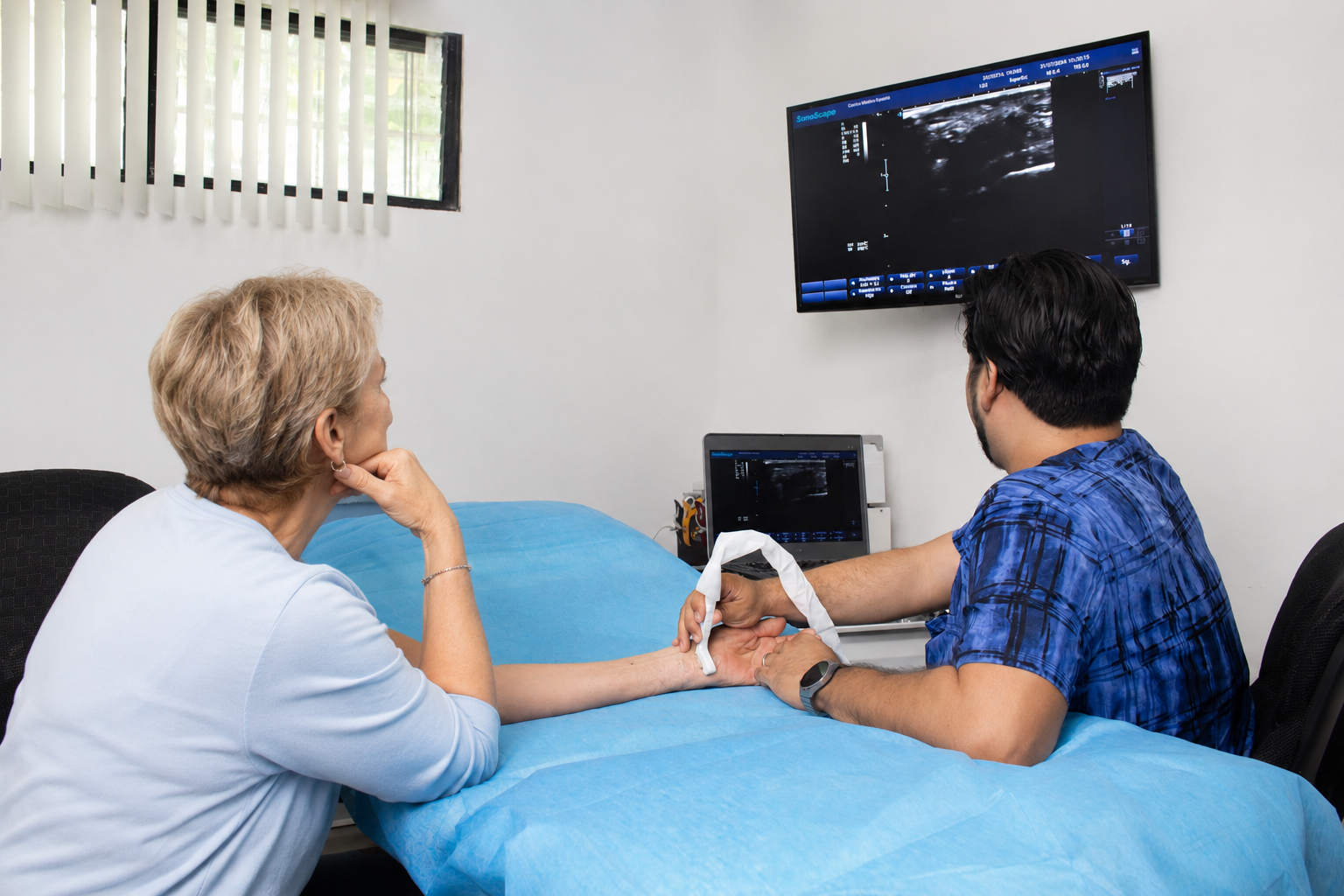
For musculoskeletal concerns, imaging or diagnostic testing may be reviewed before recommending a plan. This helps Dr. Esparza understand what may be contributing to your symptoms, whether regenerative support may be appropriate, and how image-guided care may improve precision when indicated.
After regenerative care, recovery is usually a gradual process. Some patients notice early changes in comfort or movement, while others need weeks or months to understand how their body is responding. Your timeline depends on your condition, health history, activity level, and personalized plan.
You may focus on rest, comfort, and following your care instructions. Some soreness or sensitivity may be discussed depending on the procedure and your individual plan.
Many patients begin paying closer attention to daily activities such as walking, stairs, sleep comfort, hobbies, or general mobility. Responses vary from person to person.
Your care team may review progress, symptoms, mobility, and next steps. Some patients continue to notice gradual changes over time, while others may need additional guidance.
Results vary by patient. A personalized evaluation is needed before any recommendation is made.
PATIENT EXPERIENCES
Patients often mention Dr. Esparza’s clear explanations, careful attention, and calm approach. Results vary by patient.
"Dr. Esparza is the best. He takes time, is very clear, and is internationally connected in his work in regenerative medicine. He is constantly learning and growing in his knowledge."
Patient experience
At Neo-Cells, stem cells are ethically sourced from donated, healthy full-term umbilical cords following scheduled cesarean births. Mothers provide informed consent, and all donations undergo extensive medical screening.
The umbilical cord is normally discarded after birth, so obtaining these cells does not harm the mother or baby and does not involve embryos.
Every batch is processed in specialized laboratories under strict quality standards and tested for sterility, identity, viability, and infectious diseases before being released for clinical use.
Every treatment is personalized and performed by experienced physicians. When appropriate, advanced image-guided techniques may be used to help place cells precisely in the area being treated.
Our goal is to provide regenerative medicine with high standards of safety, quality, and patient care.
Yes. Umbilical cord stem cell and regenerative medicine services can be legally provided in Mexico when performed by properly licensed medical professionals and facilities that follow Mexican health regulations. At Neo-Cells, every patient is evaluated individually, and treatments are performed under medical supervision with a focus on safety, transparency, and responsible care.
Neo-Cells offers a more personalized and integrative experience. Our doctor takes the time to carefully evaluate each patient, including ultrasound assessment when needed, to better understand their condition and create a personalized treatment plan. We also combine regenerative medicine with a recovery wellness approach, including healthy nutrition, restorative rest by the beach, massage therapy, and supportive therapies designed to help the body recover in the best possible environment.
Regenerative medicine is a personalized field of care focused on supporting the body's natural repair and recovery processes. At Neo-Cells, the conversation begins with your health history, diagnostics, symptoms, and goals so you can understand whether regenerative options may be appropriate for your case.
Mesenchymal stem cells, or MSCs, are cells studied for their role in repair signaling, tissue support, and communication within the body's recovery process. Whether they are discussed for you depends on your medical evaluation.
No. MSCs are cells studied for repair signaling and tissue support. Exosomes are tiny communication particles released by cells. They are often discussed together in regenerative medicine education, but they are not the same.
Diagnostic review helps your physician understand what may be contributing to your symptoms. Imaging, exam findings, health history, and goals all help guide whether regenerative support may be appropriate.
Ultrasound guidance may help the physician visualize the area being treated and guide placement more precisely when appropriate. Not every case requires the same approach, which is why evaluation matters.
Candidacy depends on your diagnosis, imaging, medical history, symptoms, goals, and overall health. The safest way to understand your options is through a private consultation and diagnostic review.
Some patients with chronic joint, tendon, ligament, or degenerative concerns ask about regenerative medicine. Whether it may be appropriate depends on the severity of the condition, imaging findings, health history, and goals.
Timing varies. Some patients notice changes earlier, while others need weeks or months to understand how their body is responding. Results are individual and cannot be guaranteed.
No. Regenerative medicine does not guarantee a specific outcome. The goal is to provide careful evaluation, responsible guidance, and personalized care based on your individual case.
Comfort varies by patient and by the type of procedure discussed. Dr. Esparza and the care team explain what to expect before any decision is made.
Cost depends on the evaluation, the type of regenerative support discussed, the area being treated, and the personalized plan. The care team can explain pricing after reviewing your case.
Yes. Many international patients ask about follow-up before they return home. The care team can explain communication, follow-up expectations, and what information to share after your visit.
Start by requesting a private consultation. The care team will help you share your questions, health history, goals, and any relevant imaging or medical records.
Ask questions first. No pressure. Personalized evaluation required.
Share your questions with the Neo-Cells care team in Chelem, Yucatán. Dr. Esparza can review your goals, health history, symptoms, and diagnostics to help you understand whether a regenerative medicine evaluation may be appropriate.
